
On this page (8 sections)
You need human-in-the-loop AI agents whenever autonomous actions carry financial, legal, or safety risks. Set thresholds based on calibrated risk scores, not gut feeling. Start with high-stakes tool calls like data exports or payments.
Key takeaways
- Define clear boundaries between in-the-loop and on-the-loop approvals.
- Use calibrated risk scores to trigger human review automatically.
- Ensure reviewers have full context and authority to block actions.
- Measure compliance rates to avoid the rubber stamp trap.
What does human-in-the-loop mean for AI agents in 2026?
Human-in-the-loop means a person must approve specific actions before the agent executes them. It is not a general review of output quality. The agent pauses, presents the intent, and waits for a signal. This distinction matters for latency and compliance. You are gating risky operations, not polishing text.
The industry distinguishes between three modes. In-the-loop requires a human decision before execution. On-the-loop allows execution with human monitoring after the fact. Over-the-loop leaves decisions to the agent with periodic audits. For production systems handling sensitive data, in-the-loop is the standard for high-risk actions. See the definitions in Databricks' guide on HITL.
| Mode | Decision Point | Latency | Use Case |
|---|---|---|---|
| In-the-loop | Before action | High | Payments, data exports |
| On-the-loop | After action | Low | Logs, non-critical updates |
| Over-the-loop | Audit only | None | Routine maintenance |
Why is human oversight for autonomous AI non-negotiable now?
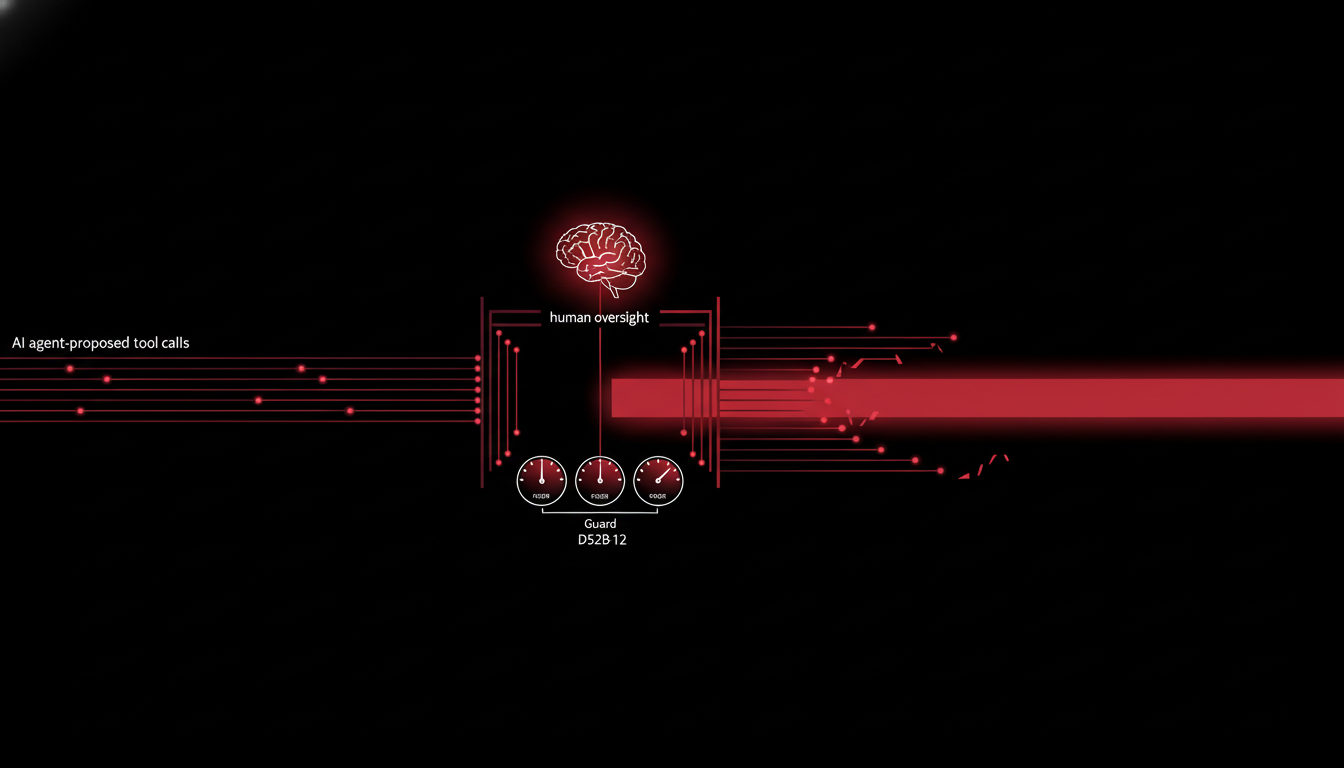
Regulations and risk profiles have tightened significantly in 2026. Automated decisions now face stricter accountability under frameworks like the EU AI Act. You cannot rely on the model alone to ensure compliance. Human oversight provides an audit trail that regulators require for high-risk systems. It also protects against automation complacency.
When agents run without checks, errors compound quickly. A tool call that seems safe might expose sensitive data. Human reviewers catch context the model misses. They verify intent against policy. This is critical for tools that interact with external systems. See how communities discuss future agent safety on Reddit.
How do you design approval workflows for production AI?
Start by mapping actions to risk levels. Do not treat all tool calls equally. Write a policy that lists which endpoints require approval. For example, any write operation to customer databases needs review. Read-only access might not. Document this clearly so engineers know where to integrate the guardrails.
Use a checklist to validate your workflow design.
- Define high-risk actions explicitly.
- Specify who can approve each action type.
- Set timeouts for pending reviews to avoid blocking.
- Log every approval or rejection for audit.
- Test the workflow with failed scenarios.
How do you calibrate risk scores for AI actions?
Risk scores determine when the system asks for human help. You need a model that outputs a score between 0 and 1. Set a threshold where values above it trigger approval. Tune this threshold based on your tolerance for error. A score of 0.8 might trigger review, while 0.3 proceeds..
Calibration requires historical data. Review past actions that caused issues. Assign scores to them to see where they fall. If many issues had scores below 0.5, lower your threshold. If reviews are clogging your queue, raise it. This process ensures your guardrails match real risk, not theoretical models.
What does a safe human handoff look like?
Reviewers need full context to make a decision. Do not ask them to guess why the agent paused. Provide the user request, the intended tool, and the expected output. Show the risk score and the policy rule that triggered the review. This reduces cognitive load and speeds up approvals.
Give the reviewer authority to block or modify the action. If they approve a request, ensure the agent cannot bypass it later. The handoff must be secure. It should not expose sensitive internal data unnecessarily. Use a dedicated interface or secure channel for these approvals.
How do you integrate HITL into your AI agent architecture?
Add a middleware layer between the agent and tool execution. This layer intercepts tool calls and calculates risk. If the score exceeds the threshold, it holds the request. It routes the request to a human queue. Once approved, it returns a token allowing execution.
Integrate with your existing identity provider. The human reviewer must be authenticated. Their decision should be signed and logged. This creates a chain of custody. Ensure the middleware is scalable. Latency here adds to total system response time. Optimize the risk model to run quickly.
How do you measure HITL effectiveness without rubber stamping?
Track approval rates and rejection reasons. If reviewers approve 99% of requests, the threshold is too low. They become busybodies rather than gatekeepers. Analyze why requests were rejected. Are they policy violations or safety concerns? Adjust thresholds based on these trends.
Measure time-to-approval. Long delays hurt user experience. If approvals take hours, automate more low-risk cases. Review the logs periodically. Look for patterns where the model tried to bypass the system. This ensures the human loop remains a control, not a formality.
Preventing automation complacency requires regular training. Reviewers should know what to look for. Update them on new risks. Rotate reviewers to keep them engaged. A fresh pair of eyes spots issues others miss. This keeps the loop active and effective.
Call to action Build your guardrails with precision. Explore how MCP Guard handles tool call approval and risk scoring. Visit https://mcp-guard.ai to see the architecture in action.
FAQ
What is the difference between human-in-the-loop and human-on-the-loop?
Human-in-the-loop requires approval before the action happens. Human-on-the-loop allows the action to proceed while a human monitors it after. The first prevents errors; the second detects them.
How do I know when to use human-in-the-loop AI agents?
Use it for actions with financial, legal, or safety impacts. If a tool call changes data or money, require approval. Low-risk tasks like summarization do not need it.
What risk score threshold should I set for approvals?
Start with 0.7 and adjust based on your error tolerance. If you miss errors, lower it. If reviews stall, raise it. Tune this using historical data from your logs.
How does the EU AI Act affect my AI agent design?
It requires human oversight for high-risk systems. You must document your decision logic and provide review mechanisms. Ensure your HITL workflow meets these compliance standards.
How do I prevent reviewers from rubber stamping approvals?
Track approval rates. If they approve everything, increase review difficulty or rotate staff. Provide clear rejection criteria and audit decisions regularly.
Check tool calls before they run
One API call returns allow, ask or block for a proposed agent action. 1,000 free requests, then $0.20 per 1,000 checks.
Topics
- human-in-the-loop AI agents
- AI agent approval workflows
- human oversight for autonomous AI
- designing HITL for AI production
- calibrated risk scores for AI actions
- human-on-the-loop vs human-in-the-loop
- EU AI Act human oversight requirements
- preventing automation complacency in AI