On this page (9 sections)
An AI agent control plane is a centralized enforcement layer that sits between your agents and their tools. It intercepts each action, evaluates intent against policy, and returns one of three verdicts—allow, ask, or block—before anything executes. MCP Guard implements this as a pre-tool-call hook: you send the action and intent, you get a calibrated score and a verdict back, and your runtime enforces it. It works alongside allow-lists, least privilege, and human approval; it does not replace them.
Key takeaways
- A control plane centralizes policy decisions so you are not editing every agent individually.
- MCP Guard returns a verdict and calibrated score for every pre-tool-call, not just a yes/no.
- Identity and least privilege must be defined before you enforce runtime policy.
- Audit trails are non-negotiable; you cannot govern what you cannot see.
- The guard complements—never replaces—sandboxing, allow-lists, and human approval.
What Is an AI Agent Control Plane, and Why Do You Need One?
An AI agent control plane is the centralized layer that governs what agents can do, which tools they can reach, and under what conditions actions execute. It replaces scattered, per-agent guardrails with one policy engine that evaluates every action before it runs. IBM describes this as the layer that orchestrates and governs autonomous agents across their lifecycle IBM’s overview of agent control planes. Fiddler frames the same idea as a system of trust spanning the agentic lifecycle Fiddler’s control plane for the agentic lifecycle.
You need one because agent sprawl happens fast. A team starts with one coding agent, adds a research agent, then a data agent, and suddenly each has its own tool permissions, its own prompt instructions, and no shared audit log. One agent writing to a shared filesystem can overwrite another agent’s output without either knowing. Without a control plane, security becomes a patchwork of prompts and prayers.
I learned this the hard way when a “harmless” research agent was given write access to a staging bucket and overwrote a production fixture during a routine run. The fix was not a better prompt. It was a central policy that said: research agents read only, write requires human approval.
What Does an AI Agent Control Plane Architecture Look Like?
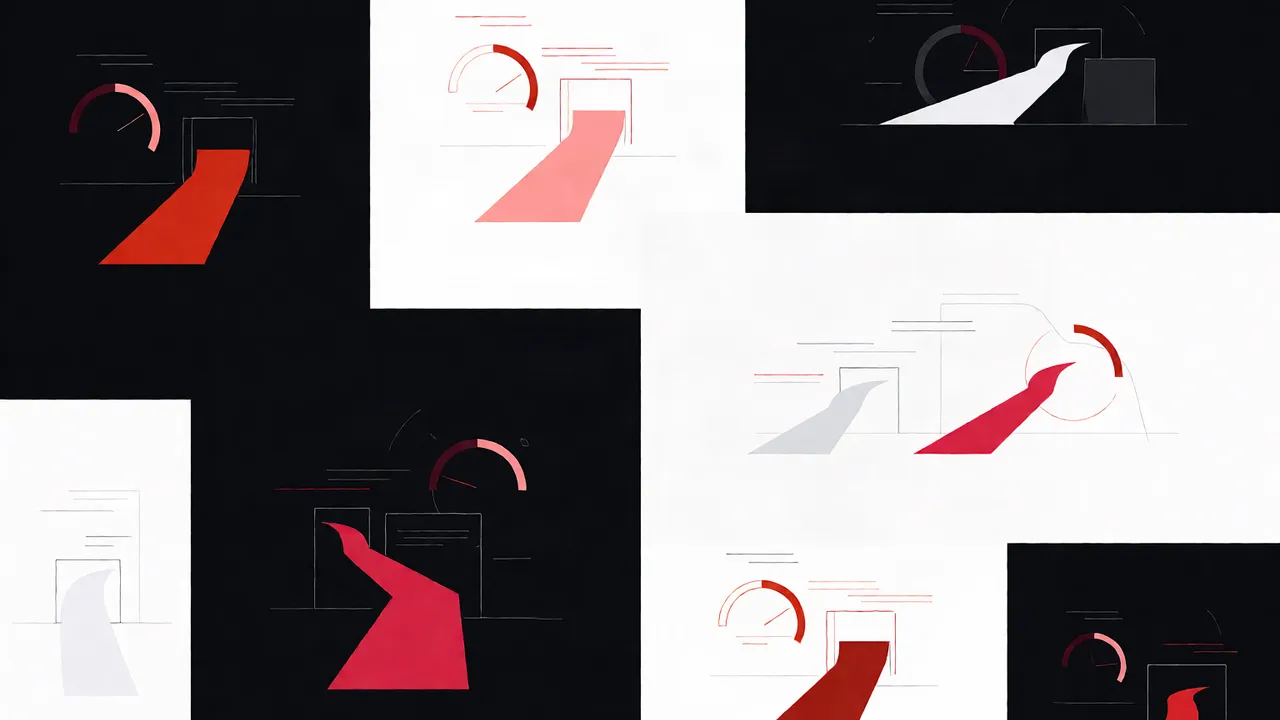
A control plane has four logical layers: identity, policy, enforcement, and observability.
| Layer | Responsibility | Example implementation |
|---|---|---|
| Identity | Identify which agent is acting | Agent ID, service account, OAuth token |
| Policy | Define what is allowed | Allow-lists, deny-lists, time-of-day rules |
| Enforcement | Intercept and decide | Pre-tool-call hook, MCP Guard endpoint |
| Observability | Log and alert | Audit trail, verdict history, anomaly detection |
The data path is simple: the agent requests a tool call, the runtime sends the action and intent to the control plane, the control plane returns a verdict, and the runtime either proceeds, pauses for approval, or blocks the call. MCP security enters here because many agents now connect through Model Context Protocol servers. If you expose an MCP server to agents, the control plane should validate which agents can connect to which MCP endpoints and what actions they can trigger through them.
I do not recommend building the enforcement layer from scratch unless you have a dedicated security team. Buying or integrating a purpose-built guard lets you focus on policy, not plumbing.
How Do You Design AI Agent Identity, Authentication, and Authorization?
Identity comes first. You cannot enforce policy if you do not know which agent is calling. Every agent should have a unique identity—never a shared API key—and that identity should be authenticated before the control plane evaluates any action.
Authorization maps identity to capability. I treat agents like service principals: an agent gets the minimum tool set it needs for its job, nothing more. If an agent only needs to read a database, it should not have a write token. This is least privilege applied to agents, and I have written about it in more detail Applying Least Privilege to AI Agents: A Practical Guide for Developers.
Authentication can be as simple as a bearer token passed with each pre-tool-call request, or as formal as mutual TLS between the agent runtime and the control plane. The key is that identity is bound to the request, not to the person who deployed the agent. For deeper runtime enforcement patterns, see AI Agent Identity and Access Management: A 2026 Guide to Runtime Enforcement.
How Does MCP Guard Enforce Policy in Real Time and Return Action Verdicts?
This is the core mechanism. Before an agent executes a tool, the runtime sends a pre-tool-call request to MCP Guard. The payload contains the action and the intent. MCP Guard evaluates that against your policy and returns a verdict—allow, ask, or block—plus a calibrated score indicating confidence.
| Verdict | Meaning | Runtime behavior |
|---|---|---|
| Allow | Policy satisfied | Tool call proceeds immediately |
| Ask | Policy uncertain or requires approval | Pause and route to human reviewer |
| Block | Policy violation | Tool call rejected, event logged |
The calibrated score helps you tune policy over time. If too many actions return “ask,” your policy is too strict. If too many return “allow” on sensitive actions, it is too loose. I tune in small increments and watch the verdict distribution, not individual calls.
Be honest about limits: MCP Guard does not catch every prompt injection, and it does not sanitize tool results. If a compromised tool returns malicious content, that is a separate control. Think of the guard as a gate at the door, not a security camera inside every room. It works best when paired with sandboxing and human-in-the-loop flows Implementing Human-in-the-Loop for AI Agents: A 2026 How-To Guide.
Your runnable next step: register your MCP server URL with MCP Guard, add the pre-tool-call hook to your agent runtime, and send one POST with a test action. Watch the verdict, then tighten policy from there.
How Do You Implement Observability and Audit Trails for AI Agent Actions?
You cannot govern what you cannot see. Every verdict—allow, ask, or block—should be written to an immutable audit log with the agent ID, tool name, timestamp, policy rule matched, and score. This log is your source of truth for incidents and for proving compliance.
Observability goes beyond logs. You want dashboards that show verdict distribution by agent, by tool, and over time. A sudden spike in “block” verdicts usually means a policy change broke a legitimate flow; a spike in “ask” means an agent is operating outside its expected scope. I review these weekly, not just after incidents.
For detection and response, pair the control plane with runtime monitoring that flags anomalous behavior, such as an agent calling a tool at 3 a.m. or accessing a dataset it has never touched before Real-time AI Agent Monitoring: Detecting and Responding to Anomalous Behavior.
What Are the Best Practices for Scaling an AI Agent Control Plane Securely?
Scaling is where most control planes fail. They work for three agents and collapse under thirty. My rules:
- Centralize policy, decentralize enforcement. One policy store, many enforcement points close to the agent runtime.
- Group agents by role. Do not manage permissions agent-by-agent; manage them by agent class (researcher, coder, analyst).
- Require human approval for high-impact actions: writes to production, external network calls, data exports.
- Revisit policies monthly. Agent capabilities change as models and tools change.
Securing multi-agent systems adds another dimension: agents that delegate to other agents. If Agent A can invoke Agent B, the control plane must evaluate the chain, not just the first hop. I treat agent-to-agent delegation as a sensitive action that requires its own policy rule.
How Do You Troubleshoot Common Control Plane Implementation Challenges?
The most common problem is false positives: legitimate actions blocked because the policy was written too narrowly. When that happens, do not just widen the rule. Look at the calibrated score and the matched policy clause, then adjust precisely.
Latency is the second issue. A pre-tool-call hook adds network round-trips. If the control plane is slow, agents time out and developers bypass it. Keep the enforcement endpoint close to the runtime, cache identity lookups, and set a timeout that fails closed—if the guard cannot answer, block by default.
Policy drift is the third. Someone updates an agent’s system prompt and suddenly it needs new tools. The control plane should surface these changes so policy stays aligned with actual agent behavior.
How Do You Future-Proof an AI Agent Control Plane?
Future-proofing means designing for change. Models will get more capable, tools will multiply, and regulations will tighten. Your control plane should separate policy from code so you can update rules without redeploying agents.
Runtime governance is the practice of continuously evaluating agent behavior against governance objectives, not just at deployment time. This means regular reviews of audit logs, automated alerts for policy violations, and a process for retiring agents that are no longer needed.
I also keep an eye on the broader ecosystem. MCP is evolving, and so are the threats around it. The control plane should be modular enough to adopt new protocol versions without rewriting your enforcement logic.
Ready to centralize your agent governance? Start with a single pre-tool-call hook and one MCP server integration. You can explore the platform at MCP Guard.
FAQ
What is an AI agent control plane?
It is a centralized layer that intercepts agent actions before execution, evaluates them against policy, and returns an allow, ask, or block verdict with an audit record.
How is MCP Guard different from a sandbox?
A sandbox contains code execution. MCP Guard decides whether the code or tool call should run at all, using policy and real-time verdicts. They complement each other.
Do I need a control plane if I only have one agent?
Probably not yet. A control plane pays off when you have multiple agents, shared tools, or compliance requirements. Start with least privilege and add the control plane as you scale.
What verdicts does MCP Guard return?
Allow, ask, or block. Each comes with a calibrated score to help you tune policy over time.
How do I start implementing one?
Add a pre-tool-call hook to your agent runtime, point it at your MCP Guard endpoint, and send one POST with a test action. Expand policy from there.
Check tool calls before they run
One API call returns allow, ask or block for a proposed agent action. 1,000 free requests, then $0.20 per 1,000 checks.
Topics
- AI agent control plane implementation
- AI control plane architecture
- centralized AI agent management
- AI agent policy enforcement
- AI agent governance framework
- securing multi-agent systems
- Model Context Protocol (MCP) security
- AI agent identity and access control plane