On this page (9 sections)
You cannot prevent AI agent hallucinations by prompting harder. You catch them by treating every agent output as untrusted until a verification step returns an allow, ask, or block verdict. The dev.to guide on stopping agent hallucinations names four essential techniques, and the Substack breakdown separates hallucination causes from types—both show that verification is a runtime control, not a modeling tweak.
Key takeaways
- Verify outputs before they reach users or downstream tools, not after the fact.
- Pair real-time checks with allow-lists, least privilege, and human approval.
- Measure verification with block rates and human-override rates, not just accuracy claims.
- MCP Guard works as a complement to those controls, not a replacement.
1. How do I prevent AI hallucinations at the generation layer?
You reduce hallucinations by narrowing the space where the agent can invent facts before it generates anything. Use a strict system prompt that forbids unsupported claims, constrain tool schemas so arguments must match expected types, and require citations from a retrieved knowledge base. Lower temperature helps for factual tasks, but it is not a substitute for verification.
Start with this checklist:
- System prompt instructs the agent to say "I don't know" when no source supports a claim
- Tool schemas define strict argument types and reject extra properties
- Retrieved sources are cited inline in the agent's output
- Temperature is set to 0 or near 0 for factual, deterministic tasks
If you are already validating inputs, read the guide on real-time input validation for AI agents to see how prompt-injection prevention fits before generation even starts.
2. What is real-time AI content verification?
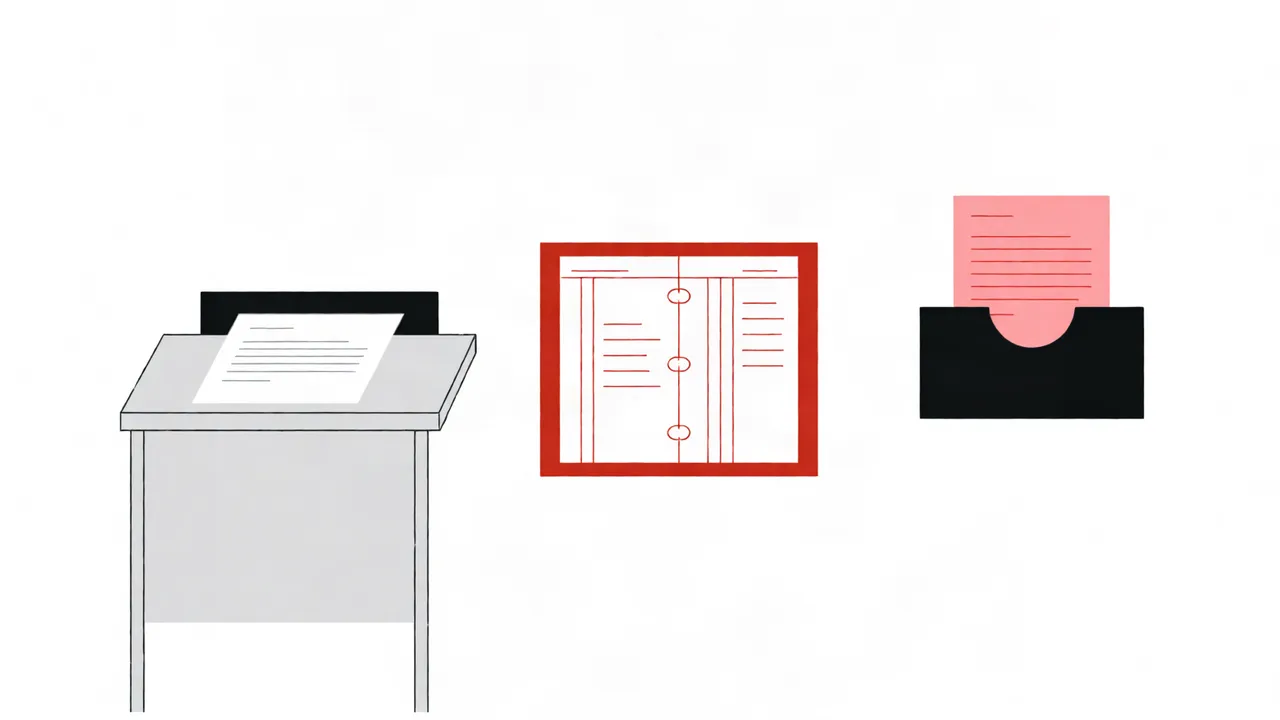
Real-time verification intercepts the agent's output between generation and delivery. A verification service checks claims against a trusted source and returns a verdict—allow, ask, or block—before the user or a downstream tool sees the text. You run this in a pre-response or pre-tool-call hook so the agent never acts on an unverified claim.
The mechanism is simple: your agent produces a candidate response, your hook sends it to the verification service, and the service returns a calibrated score plus a verdict. You enforce that verdict in your application code. If the verdict is "ask," you queue the item for human review. If it is "block," you return a refusal or a safe fallback.
This is distinct from fine-tuning or system-prompt engineering. Those shape what the model is likely to say; verification decides what actually gets through.
3. How do I validate AI agent responses before they execute?
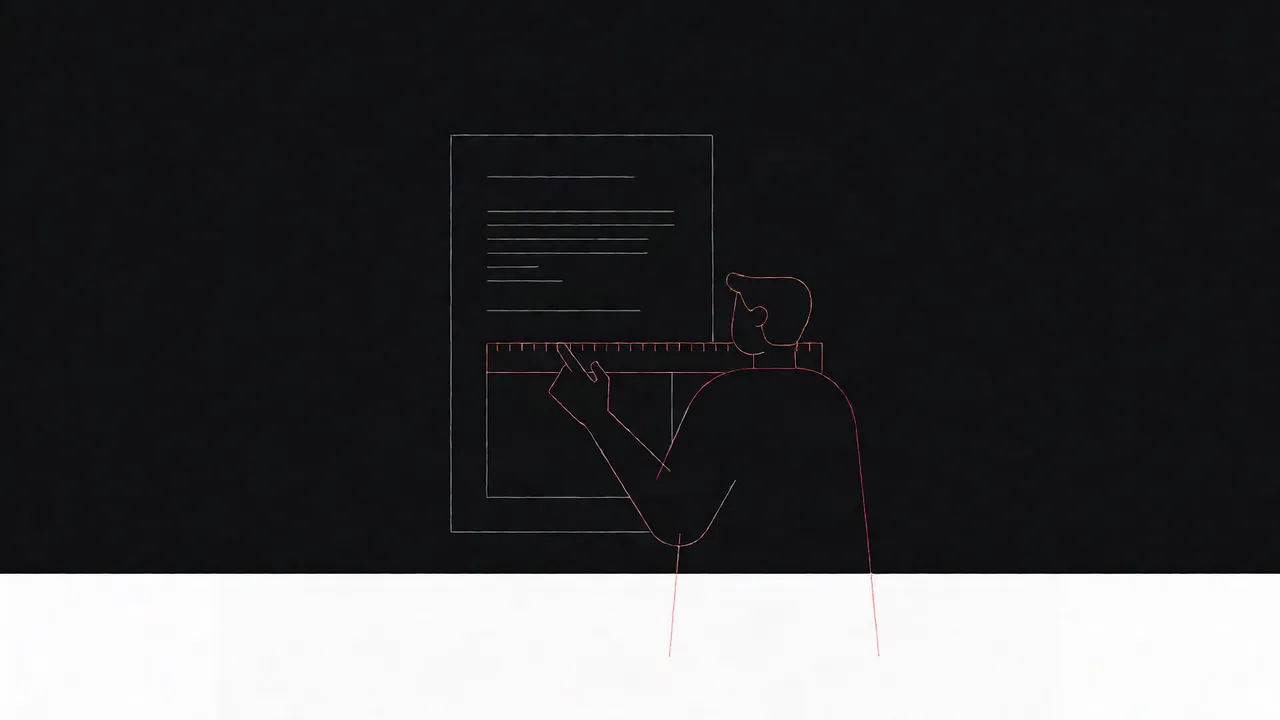
You validate the response shape and intent before any action runs. Confirm the payload matches the expected schema, the target is on your allow-list, and numeric arguments fall inside permitted bounds. Reject invalid responses immediately rather than sanitizing them after the fact.
Use this table to decide which check belongs at which layer:
| Validation layer | What it checks | Typical verdict |
|---|---|---|
| Schema | JSON structure, required fields, types | Block |
| Allow-list | Tool endpoint, domain, or API path | Block |
| Range | Numeric bounds, date formats, string length | Block |
| Factuality | Claim supported by a trusted source | Ask or block |
Schema and allow-list checks are deterministic and cheap. Factuality checks are probabilistic and more expensive, so run them last and only on outputs that pass the stricter gates. For more on tying validation to runtime policy, see implementing real-time policy enforcement for AI agents in 2026.
4. How do I detect hallucinations in AI agents after generation?
Post-generation content filtering compares the generated text to your knowledge base using entailment or retrieval. If a claim is unsupported or contradicted by a source, you flag it for review or block it outright. This catches errors the model made while generating, including citations that look real but point to nonexistent documents.
The Substack breakdown of AI agent hallucinations separates causes from types, which matters here: a detection rule that works for fabricated citations will not catch a confidently wrong summary of a real document. Tune your filters for the failure mode you actually see in your logs, not the one you read about.
Expect false positives. A strict filter will block true statements it cannot verify. Start in "ask" mode so humans review flagged outputs instead of dropping them silently.
5. How do I improve AI agent factual accuracy with grounding?
Ground the agent in a specific knowledge base and require inline citations. If no source supports a claim, the agent should decline to answer rather than guess. Grounding moves the burden of proof from the user to the system.
Use this checklist when adding grounding:
- Retrieve relevant documents before generation, not after
- Require the agent to quote or reference source IDs
- Reject responses that cite sources not in the retrieved set
- Log which source supported each claim for later audits
Grounding improves factual accuracy, but it does not eliminate the need for verification. A grounded agent can still misquote a source or combine two true statements into a false implication.
6. How do I measure hallucination reduction and AI agent reliability?
Track block rate, ask rate, human-override rate, and citation coverage. A single accuracy percentage hides where verification fails. Compare these metrics before and after enabling the verification hook to see whether it is actually reducing user-facing errors.
| Metric | What it tells you | Target behavior |
|---|---|---|
| Block rate | Share of outputs rejected automatically | Stable or decreasing over time |
| Ask rate | Share sent to human review | Low, but not zero |
| Human-override rate | How often humans disagree with the verdict | Trending toward zero |
| Citation coverage | Share of user-facing claims with a source | Increasing |
For scoring and calibration methods, see evaluating AI agent responses. If your human-override rate stays high, your verification thresholds are too strict or your knowledge base is incomplete.
7. What are the limits of real-time verification, and when should I involve human review?
Verification can miss novel facts, misjudge ambiguous claims, and add latency to every response. It also cannot verify what it cannot see—if the agent never outputs the claim, the filter never checks it.
Involve human review when:
- The verdict is "ask" and the domain is high-stakes (medical, legal, financial)
- The agent is acting on behalf of a user with elevated privileges
- The output will be published publicly without further editing
Human review is a backstop, not a scaling strategy. If most of your traffic requires a human, your verification thresholds or knowledge base need work. For guidance on where to draw trust boundaries, see decoding AI agent trust boundaries.
8. How do I integrate MCP Guard for output reliability?
Add a pre-tool-call hook that POSTs the agent's proposed output to your MCP Guard server URL. The service returns a calibrated score and a verdict—allow, ask, or block. Your application enforces the verdict: allow the response, route it to a human for approval, or return a safe fallback.
Runnable next step:
The response includes a verdict and scores. Your code decides what to do with them. MCP Guard is a complement to allow-lists, least privilege, and human approval; it does not replace them. A guard that overpromises is worse than none, so start with one endpoint, measure the block and ask rates, and expand only after the numbers stabilize.
If you are ready to add this verification layer to your agent, start with the MCP Guard pre-tool-call hook at mcp-guard.ai.
FAQ
How to prevent AI hallucinations?
Prevent them by constraining generation with strict prompts, tool schemas, and required citations, then verify outputs in real time before they reach users or tools. Prompting alone is not enough.
What is real-time AI content verification?
It is an intercepting step between agent generation and delivery that checks claims against trusted sources and returns an allow, ask, or block verdict before the output is shown or executed.
How do I validate AI agent responses?
Validate schema, allow-listed targets, argument ranges, and factual support. Reject anything that fails deterministic checks first, then run probabilistic factuality checks on what remains.
When should human review be involved?
Route outputs to a human when the verification verdict is "ask," when confidence is low, or when the domain is high-stakes. Human review should be the exception, not the default.
Does verification replace access controls?
No. Verification complements allow-lists, least privilege, and human approval. It checks what the agent says; access controls decide what the agent is allowed to do.
Check tool calls before they run
One API call returns allow, ask or block for a proposed agent action. 1,000 free requests, then $0.20 per 1,000 checks.
Topics
- AI agent hallucination prevention
- how to prevent AI hallucinations
- real-time AI content verification
- AI agent factual accuracy
- reducing AI agent errors
- AI agent response validation
- hallucination detection in AI agents
- AI agent reliability