On this page (6 sections)
Secure multi-agent systems by enforcing real-time trust boundaries and validating every tool call before execution. You must treat inter-agent requests as external traffic, not internal signals. Recent evidence shows malicious MCP servers are already deployed in the wild, invalidating static security models [https://www.knostic.ai/blog/multi-agent-security].
Key takeaways
- Enforce least privilege on every agent identity.
- Validate all inter-agent payloads before processing.
- Monitor for cascading failures in real time.
What are the unique security challenges of multi-agent AI systems?
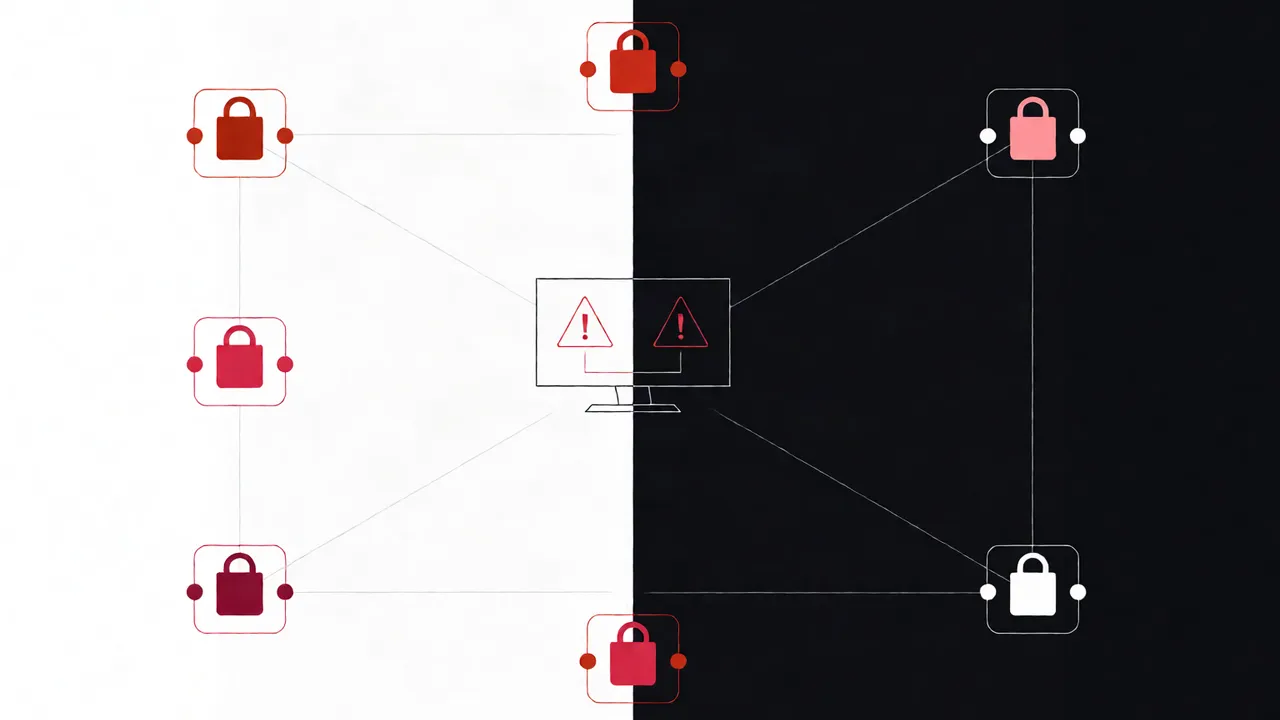
Multi-agent systems introduce complex attack surfaces where one compromised agent can pivot to others. Unlike single agents, you must secure the communication fabric and the trust relationships between peers. A single breach can cascade through the network, amplifying the impact of the initial exploit significantly.
The primary challenge is trust propagation. In a single-agent setup, you trust the model output against known inputs. In a swarm, agent A trusts agent B's output, which trusts agent C. If C is compromised, A and B become vectors for attack without knowing it. This creates a distributed AI security challenge that traditional perimeter defenses miss.
Recent design principles emphasize that security must be embedded in the architecture, not added as a patch. The submission of design frameworks like "Securing Multi-Agent Systems by Design" in November 2026 highlights the industry shift toward formalizing these trust models [https://arxiv.org/abs/2611.17883]. You cannot rely on code reviews alone; you need runtime enforcement.
How do you define and enforce trust boundaries between AI agents?

Trust boundaries separate agents by function and data sensitivity. You define these by mapping data flows and assigning identity roles to each agent. Enforcement happens at the protocol level where requests cross these defined zones.
When agent A requests data from agent B, the system checks if A has the right identity for that specific transaction. This aligns with governance principles outlined in 2026 guides for developer teams. You should implement a zero-trust policy where no agent is implicitly trusted by another, regardless of network location. This forces every interaction to carry its own cryptographic proof of authorization.
What protocols secure inter-agent communication and tool use?

Secure communication requires encryption and strict payload validation. You should use signed messages for all inter-agent traffic to prevent tampering. Validate the schema of every request to ensure it matches the expected interface.
Inter-agent communication security extends to tool calls. Agents often share APIs to execute tasks. If you do not secure these channels, an attacker can inject commands through a compromised upstream agent. You must validate all tool inputs, similar to standard API security practices. Refer to our guide on Securing AI Agent Tool Use for specific patterns on preventing malicious actions via API interactions.
You also need to monitor for anomalous behavior in these teams. If an agent suddenly requests a sensitive file it never accessed before, that is a flag. Detection relies on establishing a baseline of normal collaboration patterns. Deviations from this baseline trigger a review or a block.
How do you implement dynamic access control for shared resources?
Dynamic access control adjusts permissions based on context and risk score. You evaluate requests at runtime rather than relying on static allow lists. This allows you to grant temporary access for specific tasks without long-term privileges.
| Control Type | Static Permissions | Dynamic Runtime Checks |
|---|---|---|
| Granularity | Role-based (RBAC) | Attribute-based (ABAC) |
| Scope | Permanent access | Time-boxed access |
| Trigger | Deployment config | Request context |
When an agent needs to write to a shared database, the system checks its current task context. If the task does not match the write permission, the request is blocked. This approach supports the Implementing Fine-Grained Access Control strategy for agents. It prevents agents from accumulating unnecessary rights over time.
How do you integrate runtime protection into your multi-agent architecture?
Runtime protection intercepts requests before they reach the target agent or resource. You deploy this as a sidecar or middleware layer in your infrastructure. It analyzes the intent and provides a verdict.
The mechanism involves three steps:
- Intercept: The guard captures the outgoing request.
- Evaluate: It checks the payload against security policies and risk models.
- Act: It allows, asks, or blocks the request based on the score.
A guard that overpromises is worse than none. If your runtime layer adds too much latency, you will bypass it. Keep checks focused on high-risk actions like file access or network calls. For comprehensive policies, review our guide on Implementing Real-time Policy Enforcement for 2026 standards.
To measure effectiveness, track the number of blocked requests and false positives. If you see a spike in blocks for normal operations, refine your thresholds. You want the system to catch actual threats without stopping productive work. This feedback loop is essential for maintaining a secure and functional swarm.
Secure your deployment by configuring a pre-tool-call hook on your MCP server. This simple step stops malicious payloads before they execute. We offer a runtime solution designed to help you enforce these boundaries automatically. Visit our runtime protection guide to compare options for your stack.
FAQ
What is the biggest risk in multi-agent systems?
The biggest risk is trust propagation. If one agent is compromised, it can use its legitimate credentials to attack other agents in the swarm, spreading the compromise.
How do I stop agents from overusing permissions?
Implement dynamic access control. Grant permissions only for the duration of a specific task and revoke them immediately afterward to minimize exposure.
Do standard API security tools work for AI agents?
They help but are insufficient. AI agents require intent analysis, not just schema validation. You need to understand what the agent is trying to achieve, not just what it is sending.
How often should I update my agent security policies?
Update policies whenever your agent capabilities change. New tools or data sources introduce new attack vectors that require immediate policy adjustments.
Can I secure agents without slowing down performance?
Yes. Focus checks on high-risk actions like file access or network calls. Skip validation for low-risk internal messages to maintain speed.
Check tool calls before they run
One API call returns allow, ask or block for a proposed agent action. 1,000 free requests, then $0.20 per 1,000 checks.
Topics
- securing multi-agent systems
- AI agent collaboration security
- multi-agent orchestration security
- trust boundaries in multi-agent AI
- runtime protection for multi-agent AI
- inter-agent communication security
- distributed AI security challenges
- governance for AI swarms