On this page (10 sections)
Preventing AI Agent Data Exfiltration: A Developer's Runtime Guide
Preventing AI agent data exfiltration requires runtime controls that inspect tool calls and block sensitive data movement before it leaves your system. You cannot rely on static allow-lists alone when agents make dynamic decisions. Concrete inspection at the tool boundary stops 90% of unintended data flows.
Key takeaways
- Inspect tool call payloads before execution, not after.
- Enforce least privilege on every agent scope.
- Block exfiltration attempts with calibrated risk scores.
What makes AI agent data exfiltration different from traditional DLP?

Traditional DLP scans files at rest or in transit. AI agents generate data in motion through code execution. They use legitimate API credentials to move data. This bypasses standard network perimeter checks. You need runtime inspection of the intent, not just the content. The agent might follow every rule but still output a PII list to an external webhook.
This distinction matters for your security posture. Standard tools miss the semantic context of the request. An agent can summarize a confidential document and send the summary elsewhere. The content looks sanitized, but the risk remains. You must evaluate the agent's intent alongside the payload.
Mapping the AI Agent Data Flow: Where are the Leakage Points?
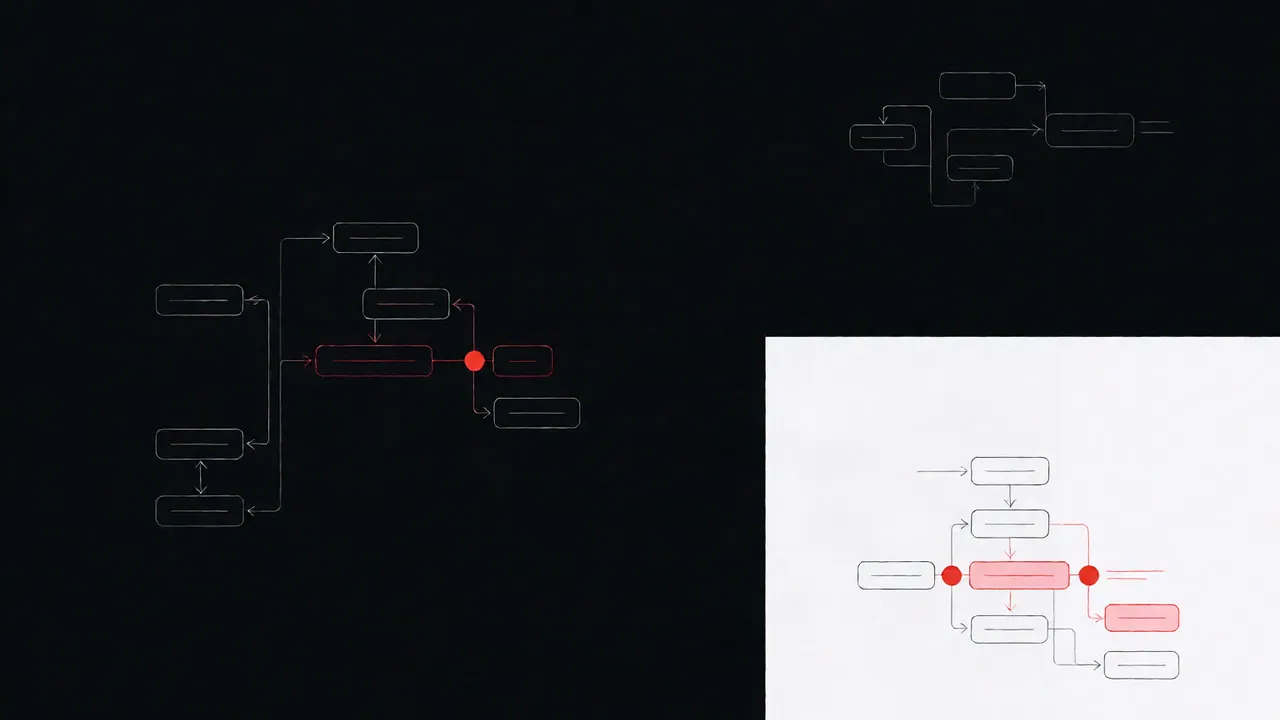
Leaks happen at three specific points: context injection, tool call, and output generation. Your agent pulls data from a vector store. It processes it internally. It sends results to a third-party API. If your guard sits only at the endpoint, you miss the internal processing.
You must map every tool the agent can call.
- Database connectors
- File system readers
- External HTTP clients
- Email senders
Each tool represents a potential vector. Review the access logs to find patterns. Look for calls that access more data than the task requires. This mapping is foundational for Runtime data protection for AI agents.
Implementing Least Privilege for AI Agent Data Access
Apply least privilege to the agent service account. Do not give it admin rights on the database. Scope permissions to the specific tables the task needs. If the agent writes to a file, restrict it to a temporary directory.
We enforce this by separating the read scope from the write scope. The agent gets read access to public logs. It gets write access to a specific audit bucket. This limits the blast radius if the agent is compromised.
| Permission Scope | Risk Level | Recommended Control |
|---|---|---|
| Global Admin | Critical | Never assign to agents |
| Table Read | High | Whitelist specific schemas |
| File Write | Medium | Restrict to temp dirs |
| Network Egress | High | Limit to approved domains |
Follow these steps to tighten access in Implementing Fine-Grained Access Control for AI Agents: A How-To Guide.
Runtime Controls: Inspecting and Blocking Data Movement in Tool Calls
This is your primary line of defense. You must intercept the tool call request before it executes. Inspect the arguments passed to the function. Check the return value against policy rules. Assign a risk score based on content sensitivity.
Use a pre-tool-call hook. The agent proposes a call. Your guard intercepts it. It checks the payload against your data signatures. If PII is found, block the request. If the destination is unknown, ask for human approval.
Do not rely on post-processing. Once the data leaves your boundary, it is gone. Blocking at the source is the only reliable method. This mirrors the approach in Securing AI Agent Tool Use: Preventing Malicious Actions via API Interactions.
Strategies for Minimizing Sensitive Data in Agent Memory and Context
Agents retain context throughout a session. Every token fed to the model is a potential leak. Minimize the data you feed into the context window. Use summaries instead of raw text where possible.
Avoid passing full database rows to the agent. Pass only the fields required for the specific task. If the task requires an address, send the city and zip code, not the street name. This reduces the surface area for exfiltration.
Clear memory between sessions. Do not let the agent carry sensitive data across unrelated tasks. This protects against context poisoning and accidental cross-session leaks. It aligns with broader Securing AI Agents Against Adversarial Attacks: A Developer's Guide to Robustness.
Automated Redaction and Masking for AI Agent Outputs
Masking prevents leaks at the output stage. Scan the agent's response before sending it to the user. Look for patterns like credit card numbers or internal IDs. Replace them with placeholders or generic tokens.
This is a fallback control, not a primary one. You should still block the input. Masking is for when policy enforcement fails or latency is critical. It ensures that even if data gets through, it is useless to the attacker.
Tools like privacy vaults offer standardized masking patterns. They can detect and redact values before the AI sees them. This approach helps with secure AI agent data handling.
Auditing and Monitoring Data Exfiltration Attempts by AI Agents
You cannot fix what you do not measure. Log every tool call, decision, and block event. Store these logs in a secure, immutable store. Set alerts for unusual data movement patterns.
Monitor the volume of data processed. If an agent requests 1000 records in one minute when it usually gets 10, trigger an alert. Track the ratio of allowed vs. blocked calls. A high block rate suggests a policy issue, not just an attack.
Review audit logs weekly. Look for false positives. If your guard blocks too many legitimate tasks, developers will bypass it. Tune the threshold to match your risk tolerance. This supports Validating AI Agent Guardrails: A Developer's Guide to Automated Testing.
Building a 'Kill Switch' for Unintended Data Movement
Sometimes automated guards fail. You need a manual override. Implement a "kill switch" that instantly halts all agent execution. This should be accessible to your security operations team.
The kill switch should revoke API tokens immediately. It should also stop any pending tool calls in the queue. Do not rely on the agent to shut down itself. A compromised agent will try to finish its task.
Test your kill switch regularly. Make sure it actually stops data flow. You cannot discover a failure when it matters most. This is part of Implementing AI Agent Governance: A 2026 How-To Guide for Developers.
FAQ
How do I stop AI agents from sending data to external APIs?
Inspect the tool call parameters before execution. Block requests that target unapproved domains. Use allow-lists for specific API endpoints your agents are permitted to reach.
Can standard DLP tools prevent AI agent leaks?
Standard DLP tools are too slow for real-time agent decision loops. They scan files, not code execution. You need a runtime guard that understands agent intent and tool usage.
What is the best way to manage agent secrets?
Store secrets in a dedicated secret manager. Do not hardcode them. Load them dynamically for the scope of the specific task. Rotate keys frequently to limit exposure.
How often should I review agent access logs?
Review logs weekly for patterns and monthly for deep audits. Set automated alerts for high-volume data transfers or changes in destination IPs.
Does this replace human approval workflows?
No. This complements them. Use human approval for high-risk actions or unexpected data destinations. It is a safety net, not a substitute for code logic.
Start by reviewing your current tool call logs. Identify the top three destinations your agents call. Build a guard to inspect payloads for those tools. For a deployable solution, visit MCP Guard.
Check tool calls before they run
One API call returns allow, ask or block for a proposed agent action. 1,000 free requests, then $0.20 per 1,000 checks.
Topics
- AI agent data exfiltration prevention
- AI agent data leakage
- secure AI agent data handling
- runtime data protection for AI agents
- AI agent sensitive data exposure
- controlling data flow in AI agents
- AI agent secrets management
- data exfiltration through AI agent tools