On this page (9 sections)
A 2026 survey of agentic AI treats tool use and action execution as the line between LLM security and AI agent security, which means an adversary who controls your agent’s input can also control what it does. The Attack and Defense Landscape of Agentic AI
You prevent adversarial attacks on AI agents by layering input validation, runtime policy enforcement, and tool-call approval—not by hoping the model ignores malicious prompts. Robustness comes from assuming the model will be tricked and building controls that act after the trick succeeds.
Key takeaways
- Treat every agent input as untrusted, even if it comes from an internal user or another agent.
- Validate inputs before they reach the model, and validate tool calls before they execute.
- Detect anomalies in behavior, not just in text, because evasion attacks often look like normal conversation.
- Test adversarially before deployment; a guard that has never been probed is just an assumption.
What Are Adversarial Attacks on AI Agents, and Why Do They Matter in 2026?
An adversarial attack on an AI agent is any input crafted to make the agent behave outside its intended policy—stealing data, issuing unauthorized tool calls, or exfiltrating credentials. Unlike attacks on a static model, agent attacks exploit the gap between language understanding and action: the model reads a malicious instruction and then acts on it through APIs, databases, or email. That action layer is what makes AI agent security vulnerabilities different from ordinary AI model security issues.
A 2024 paper on the security of AI agents defines a threat model where the adversary can inject prompts, observe outputs, and in some cases control tool results. Because agents chain reasoning with execution, a single successful prompt can cascade into multiple unauthorized actions. If you are mapping where your agent is exposed, start with the attack surface guide for 2026 threats.
What Are the Most Common Adversarial Attack Techniques Targeting AI Agents?
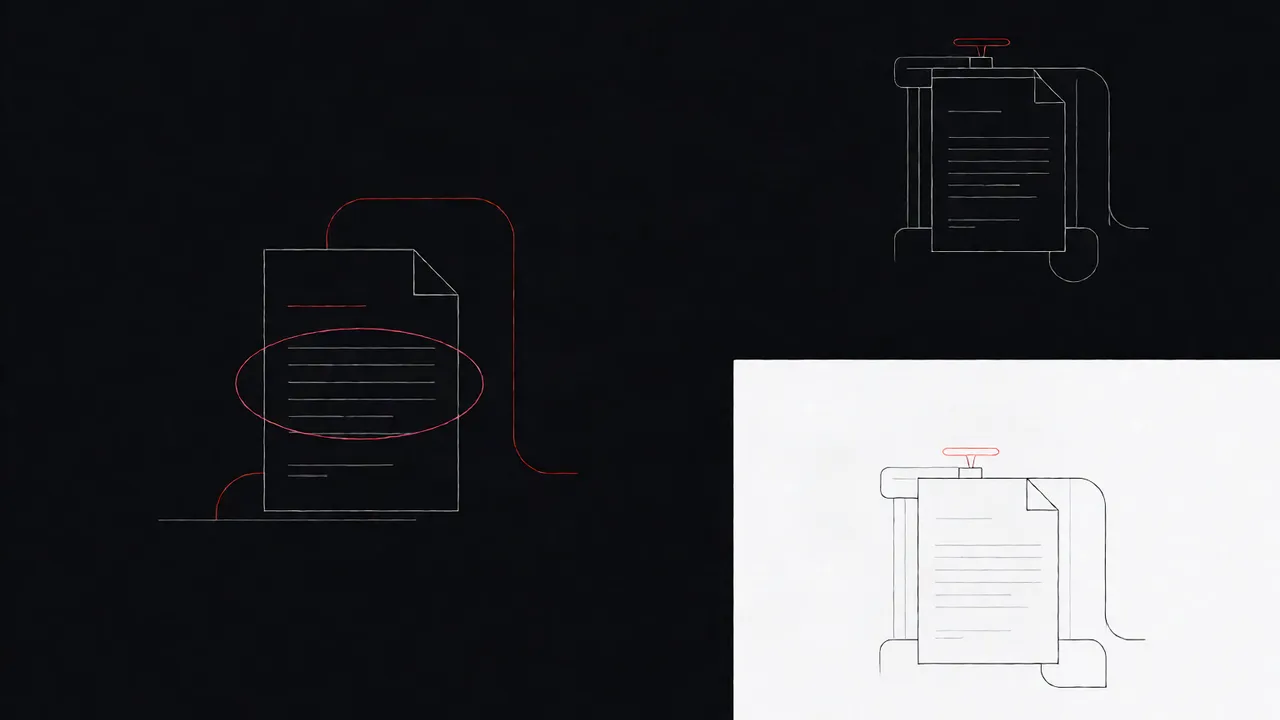
Evasion attacks trick a deployed agent at inference time. The attacker sends a prompt injection, a hidden instruction, or an encoded payload that makes the agent ignore its system instructions and perform an unintended action. Poisoning attacks happen upstream: the attacker corrupts training data, fine-tuning examples, or retrieval documents so the agent learns or retrieves malicious behavior. A 2026 survey groups these into the core attack categories for agentic systems, alongside extraction and abuse of tool use The Attack and Defense Landscape of Agentic AI.
The practical risk is that these techniques combine. An agent might retrieve a poisoned document that contains an evasion payload, then execute that payload against your production database. You should assume both vectors exist and design controls for each.
How Do You Sanitize and Validate AI Agent Inputs Without Breaking Legitimate Requests?

You cannot sanitize agent input with a keyword blocklist. Agents need to read natural language, so you validate structure and intent instead: schema-check tool arguments, reject out-of-scope commands, and strip hidden markup before the model sees it. The check runs in a pre-tool-call hook, not after the model has already decided to act.
For prompt injection specifically, see the developer’s guide to real-time input validation. It covers how to inspect incoming messages for indirect injections without blocking legitimate variation in how users write.
What Defensive Coding Practices Make AI Agents More Robust?
Defensive AI programming means writing agent code that assumes the model output is untrusted. You type-check every tool argument, wrap external calls in timeout and retry boundaries, and never let the agent construct raw SQL, shell commands, or HTTP requests from model output. The agent proposes; the code disposes.
Use allow-lists for tool names and destinations. Run the agent with least-privilege credentials so a compromised tool call cannot read everything. Log every model-to-tool transition so you can reconstruct what happened after an incident. These are table-stakes practices, not exotic defenses, and they matter more than any single filter.
How Do You Detect Anomalous AI Agent Behavior in Real Time?
Real-time anomaly detection watches what the agent does, not just what it says. Flag sudden spikes in tool calls, calls to unfamiliar endpoints, or data leaving the environment through unexpected channels. A spike in email sends at 3 a.m. is more suspicious than a strange sentence in a chat transcript.
Score each event and route high scores to an ask or block queue. Low scores pass through. This keeps noise low while catching the behavioral signatures of a compromised agent.
How Do You Evaluate Your AI Agent's Adversarial Robustness?
You evaluate robustness by running red-team prompts against a staging agent and measuring how often it violates policy. Track refusal rate on malicious inputs, false-positive rate on legitimate inputs, and time-to-block for tool-call anomalies. Automated guardrail testing catches regressions every time you change the system prompt or model version.
For the guard side, see how to validate guardrails with automated testing.
| Defense layer | What it checks | When it runs | Example |
|---|---|---|---|
| Input validation | Schema, intent, hidden markup | Pre-model | Reject base64 payload in user message |
| Runtime policy | Tool allow-list, argument types | Pre-tool-call | Block DELETE on production database |
| Anomaly detection | Call volume, destination, data egress | During execution | Alert on 10x normal email volume |
| Human approval | High-risk actions | Before execution | Require approval for fund transfers |
How Do Guardrails Mitigate Malicious Actions After an Attack?
Guardrails act as the last control between a compromised model and a harmful action. They inspect the model’s proposed tool call, score it against policy, and return allow, ask, or block. A guard that overpromises is worse than none, so you pair it with least-privilege credentials and human approval for high-risk actions.
See how to secure agent tool use against malicious API interactions. MCP Guard is built for this layer: one POST to the MCP server returns a calibrated verdict, and it complements—not replaces—your existing controls. Learn more at mcp-guard.ai.
What Does a Proactive AI Agent Security Posture Look Like?
A proactive posture means you test before you deploy, monitor after you deploy, and update controls when the model changes. Maintain an inventory of agent tools, review anomaly logs weekly, and rerun adversarial evaluations after every fine-tuning or retrieval corpus update. AI agent trustworthiness is a property of the system, not the model.
If you are shipping agents, add a pre-tool-call hook to your MCP server today. MCP Guard returns allow / ask / block verdicts with calibrated scores, and it works alongside your existing allow-lists and human approval steps. Start at mcp-guard.ai.
FAQ
What is the difference between AI model security and AI agent security?
AI model security focuses on the weights and inference of a single model. AI agent security covers the model plus its tools, memory, and action execution, which expands the attack surface to include every tool the agent can call.
How do evasion attacks differ from poisoning attacks?
Evasion attacks happen at inference time and try to trick an already-deployed agent into misbehaving. Poisoning attacks happen upstream, corrupting training data, fine-tuning sets, or retrieval documents so the agent learns or retrieves malicious behavior.
Can input validation stop all adversarial attacks?
No. Input validation reduces the attack surface, but it cannot catch every encoded payload or novel prompt-injection variant. It works best as one layer among runtime policy enforcement, anomaly detection, and human approval.
How often should I re-test my agent’s robustness?
Re-run adversarial evaluations whenever you change the system prompt, switch models, or update the retrieval corpus. A guard validated against last month’s model may not survive next month’s.
Does MCP Guard replace allow-lists and human approval?
No. It complements them. MCP Guard inspects tool calls and returns allow / ask / block verdicts, but you still need least-privilege credentials and human approval for high-risk actions.
Check tool calls before they run
One API call returns allow, ask or block for a proposed agent action. 1,000 free requests, then $0.20 per 1,000 checks.
Topics
- AI agent adversarial attack prevention
- robust AI agents
- AI agent security vulnerabilities
- evasion attacks AI
- poisoning attacks AI
- AI model security
- defensive AI programming
- AI agent trustworthiness