On this page (14 sections)
Real-time AI agent threat detection intercepts every tool call before it executes, scores the action and intent, and returns an allow, ask, or block verdict. Unlike SIEM and EDR, which analyze logs after the fact, it works inside the agent loop at runtime.
Key takeaways
- SIEM and EDR are built for human logins and known malware, not for agents that generate novel tool calls at runtime.
- Detection works by sending action and intent to a guard before execution and receiving a calibrated verdict.
- Scores should be tuned to your environment; a guard that overpromises is worse than none.
- Detection complements allow-lists, least privilege, and human approval—it does not replace them.
Why do SIEM and EDR miss AI agent threats?
SIEM and EDR were built for human users and static binaries. An AI agent does not log in with a password; it generates tool calls based on model output. Those calls can look legitimate while doing something harmful, and by the time a SIEM rule fires, the agent has already acted. EDR sees the host process, not the agent's intent.
This gap is well documented in security research on autonomous systems, including Cisco Identity Intelligence's overview of AI agent threat detection and response. The core issue is timing: traditional tools are reactive, while agents operate in seconds.
You also lose identity context. A SIEM event tells you that python.exe ran. It does not tell you that an agent acting as a support representative just queried the customer database and wrote the result to an external endpoint.
How does real-time AI agent threat detection work?

You send the agent's proposed action and its intent to a guard before the tool runs. The guard scores both and returns a verdict: allow, ask, or block. This happens in a pre-tool-call hook, placing a decision point between the model and the tool.
The mechanism is simple. Your agent calls a hook with the intended tool name, arguments, and surrounding context. The guard evaluates that payload against policies and behavioral baselines, then returns a score and a verdict. If the verdict is block, the tool never executes. If it is ask, a human reviews the request first.
This is not a replacement for static analysis or code review. It is a runtime control. You can read more about the developer workflow in The Developer's Guide to Real-time AI Agent Security: Beyond Static Analysis in 2026.
What is AI agent behavioral analytics?
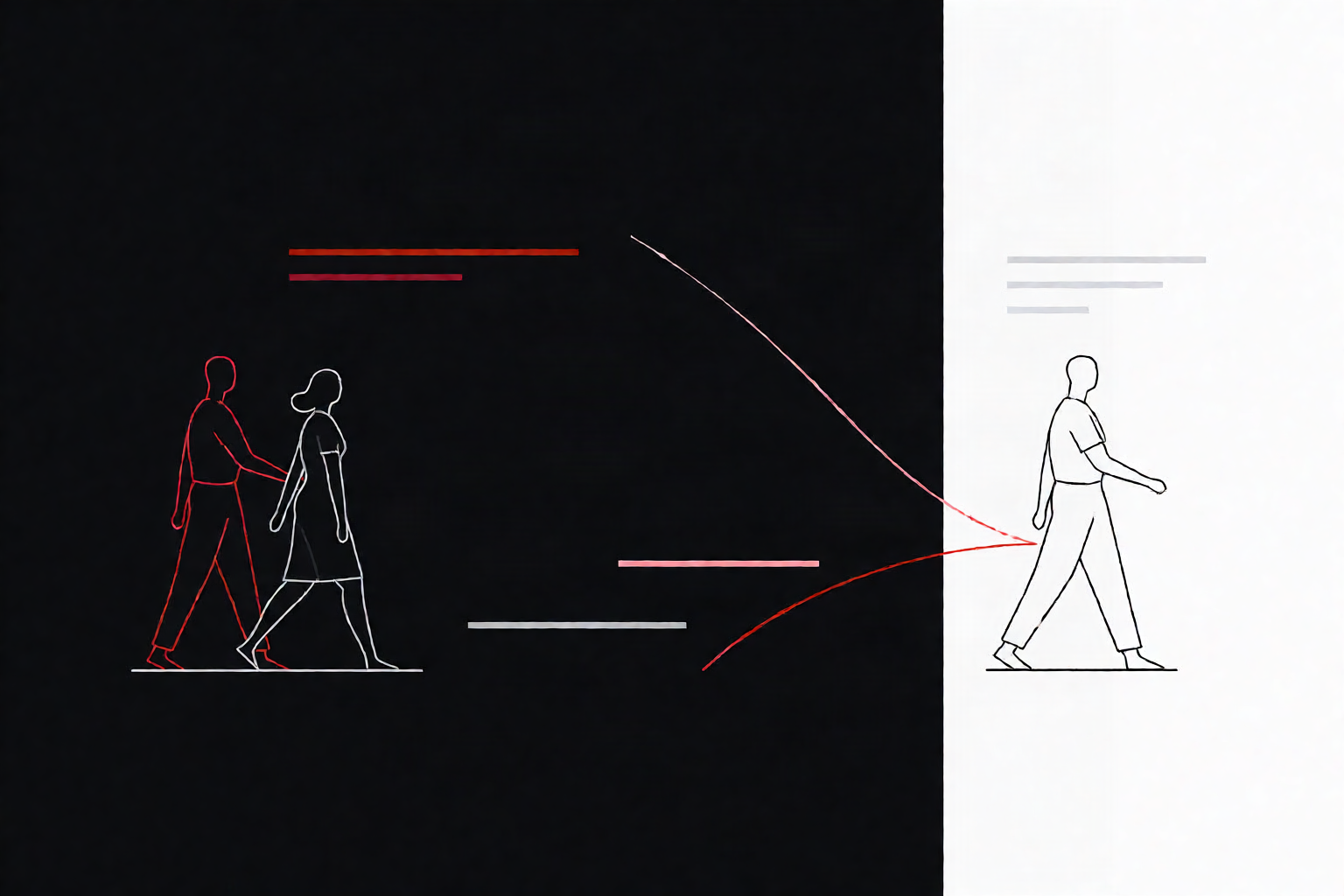
Behavioral analytics for AI agents establishes a baseline of normal tool usage, argument patterns, and call sequences per agent identity, then flags deviations in real time. It is not signature-based; it learns what normal looks like for each agent.
For example, a billing agent that normally calls an invoicing API twice a day suddenly calls a file-system tool and an external webhook. That is a behavioral anomaly. The guard scores the deviation and can block the call before data leaves your environment.
Behavioral analytics works best when you separate agent identities. If every agent runs under the same service account, you cannot tell whether a call is normal for that agent or an anomaly.
What is AI agent anomaly detection?
Anomaly detection scores how far a specific runtime event deviates from the agent's established baseline. It flags outliers such as unusual arguments, odd call times, or new target endpoints without waiting for a signature update.
You should treat anomaly scores as signals, not automatic blocks. A high anomaly score on a legitimate but rare action—like a quarterly report generation—creates noise. Tune thresholds per agent and per tool category, and review the outliers before promoting them to blocks.
How do you detect AI agent misuse?
Misuse detection looks for authorized agents performing unauthorized actions. A support agent reading HR records, or a development agent pushing to production, is misuse even if the agent has valid credentials.
The guard compares the requested action against the agent's declared role and current context. If an agent attempts to call a tool outside its scope, the verdict is block. This is where fine-grained access control matters. See Implementing Fine-Grained Access Control for AI Agents: A How-To Guide for implementation details.
You can also detect misuse through data exfiltration patterns. Preventing AI Agent Data Exfiltration: A Developer's Runtime Guide covers runtime controls for this exact scenario.
| Verdict | When to use | Effect on agent | Example |
|---|---|---|---|
| Allow | Score below threshold | Action executes | Normal email send |
| Ask | Score in gray zone | Human approves | First-time export |
| Block | Score above threshold | Action rejected | Credential access |
How do you integrate detection with your existing security stack?
Stream detection verdicts and scores into your SIEM as structured events. Feed block decisions to your EDR or identity provider as policy enforcement. The guard sits in front of the tool, not behind the log, so your existing tools receive enrichment rather than raw noise.
For platform selection, see Comparing AI Agent Security Platforms in 2026: A Developer's Guide to Runtime Protection. It covers how different guards expose telemetry and where they fit in the stack.
Do not rip out your SIEM. Use the guard as a complement. The SIEM provides long-term storage and correlation across humans and agents; the guard provides the real-time decision point. Broader context on agent monitoring is available from Obsidian Security's AI agent monitoring and threat detection page.
How do you calibrate detection scores and reduce false positives?
Start in allow-only mode. Let the guard score every action but never block. Review the scores for a week or two to see where your legitimate agents land. Then introduce ask for the gray zone, and only move to block once you understand the noise.
False positives usually come from legitimate but rare actions, not attacks. A monthly reconciliation job, a one-time data migration, or a new integration can all spike anomaly scores. Document these as expected behavior and adjust thresholds.
Scores are typically calibrated on a 0.0 to 1.0 scale, where higher values indicate greater deviation from baseline. The exact cutoff depends on your risk tolerance. A high-security agent handling payments might block at 0.7; an internal admin agent might only block at 0.9.
What is runtime AI agent protection?
Runtime protection enforces decisions while the agent is running, not just at deployment time. It can block a tool call mid-session, revoke a session token, or require human approval before a sensitive write.
The implementation is a pre-tool-call hook that sends one POST to the MCP server URL with the action and intent. The guard responds with a verdict. If you need to automate remediation, see Implementing Real-time AI Agent Remediation: A Developer's Guide to Automated Action.
Runtime protection has limits. It cannot catch logic errors that occur entirely inside the model's reasoning, and it cannot fix an agent that is poorly designed. It is a control point, not a guarantee.
How do you handle AI agent incident response?
When a guard blocks or flags an action, capture the full trace: prompt, tool call, arguments, verdict, and score. Responders can revoke the agent's credentials, roll back the action, or add the pattern to a deny list.
Incident response for agents is faster than for humans because the machine generates an exact audit trail. You know what the agent intended, what it tried to do, and what the guard decided. Use that trace to update policies and retrain baselines.
How do you run AI agent security operations?
AI agent security operations means treating agent behavior as a continuous telemetry stream. Your SOC reviews verdict trends, tunes thresholds, and hunts for agents that repeatedly drift into the ask or block zones.
Create dashboards that show verdict distribution by agent, top blocked tools, and anomaly score trends. Alert on sudden shifts—such as an agent that normally scores 0.1 suddenly scoring 0.8 across ten calls in one minute.
How do you build an AI agent threat hunting program?
Threat hunting for agents starts with hypotheses about abuse. For example: "An agent could chain a read tool with an exfiltration tool to steal data." You test that hypothesis against runtime traces, looking for low-and-slow abuse that never tripped a block.
Hunt for sequences, not single events. A single file read is normal. A file read followed by an encoding call and an outbound POST is a pattern worth investigating. Document your hypotheses and the queries you run so the program is repeatable.
What does a real agent attack look like?
An attacker does not need to breach your network if they can manipulate an agent already inside it. Through prompt injection or compromised tool descriptions, an attacker can cause an agent to call tools it would not normally call. The guard catches this at the tool-call layer by scoring the intent and arguments, regardless of how the agent was persuaded.
This is distinct from adversarial attacks on the model itself. For model-level robustness, see Securing AI Agents Against Adversarial Attacks: A Developer's Guide to Robustness.
How do you manage AI agent security operations across multiple agents?
In a multi-agent system, one agent's output becomes another agent's input. A compromised agent can pass malicious instructions to a downstream agent. Runtime detection must evaluate each hop independently, scoring the action and intent at every tool call.
For details on trust and collaboration between agents, see Securing AI Agents in a Multi-Agent System: Real-time Trust and Collaboration.
If you want to try this yourself, the guard exposes a pre-tool-call hook and accepts one POST to the MCP server URL. Start with allow-only mode, review your scores, and move to block when you are ready. Learn more at MCP Guard.
FAQ
What is real-time AI agent threat detection?
It is a runtime control that scores an agent's intended action and intent before the tool executes, returning an allow, ask, or block verdict.
How is AI agent anomaly detection different from signature-based detection?
Anomaly detection looks for deviations from an agent's normal behavior rather than matching known attack patterns, so it can catch novel misuse without a prior signature.
Can real-time detection stop prompt injection?
It can block the tool calls that result from prompt injection, but it cannot catch every manipulation that happens inside the model's reasoning. Use it alongside input validation.
Will this block legitimate automation?
Only if your thresholds are too tight. Start in allow-only mode, calibrate scores to your agents' normal behavior, and introduce blocking gradually.
Do I still need a SIEM if I use real-time agent detection?
Yes. The guard provides real-time verdicts; the SIEM provides long-term storage, correlation, and alerting across your entire environment.
Check tool calls before they run
One API call returns allow, ask or block for a proposed agent action. 1,000 free requests, then $0.20 per 1,000 checks.
Topics
- real-time AI agent threat detection
- AI agent anomaly detection
- AI agent security monitoring
- AI agent behavioral analytics
- runtime AI agent protection
- AI agent incident response
- AI agent security operations
- detecting AI agent misuse