On this page (8 sections)
You comply with GDPR and CCPA for AI agents the same way you secure any system that touches personal data: map what the agent sees, minimize what it keeps, encrypt what it moves, and enforce consent before it acts. GDPR fines reach 4% of annual global turnover or €20 million, whichever is higher, so real-time privacy enforcement belongs in your control plane.
Key takeaways
- AI agents handle personal data in prompts, tool arguments, and memory, which makes GDPR minimization and CCPA deletion rights harder to automate.
- Map every data flow before you add controls: prompts, model calls, tool arguments, vector memory, and outbound APIs.
- Encryption (TLS 1.2+ in transit, AES-256 at rest) is table stakes; it does not replace authorization or consent.
- A real-time guardrail returns allow / ask / block before a tool call runs. It complements allow-lists and human approval—it does not replace them.
- Audit logs must record what data the agent saw, why it was sent, and who approved it.
Why do AI agents introduce new data privacy risks in 2026?
An AI agent does not just process personal data; it decides where to send it. One prompt can contain a customer's email address, and the very next tool call can post that address to a third-party API or write it into vector memory. That chain creates GDPR purpose-limitation and CCPA sale/sharing exposure the instant the agent acts without a human in the loop.
Unlike a static model, an agent chains together inference, tool use, and memory. The FPF notes that AI agents move data protection considerations beyond static models into autonomous action, which means your compliance boundary moves with every tool the agent can call FPF's guidance on AI agents and data protection considerations. The biggest risks are prompt data exfiltration, indefinite memory retention, and tool-side leaks to external APIs. Kiteworks frames this as an enterprise balance: innovation on one side, data privacy and security on the other Kiteworks on balancing AI agent innovation with enterprise data privacy. You manage that balance by treating each agent action as a data-processing event, not just a function call.
How do I map my AI agent's data flow?
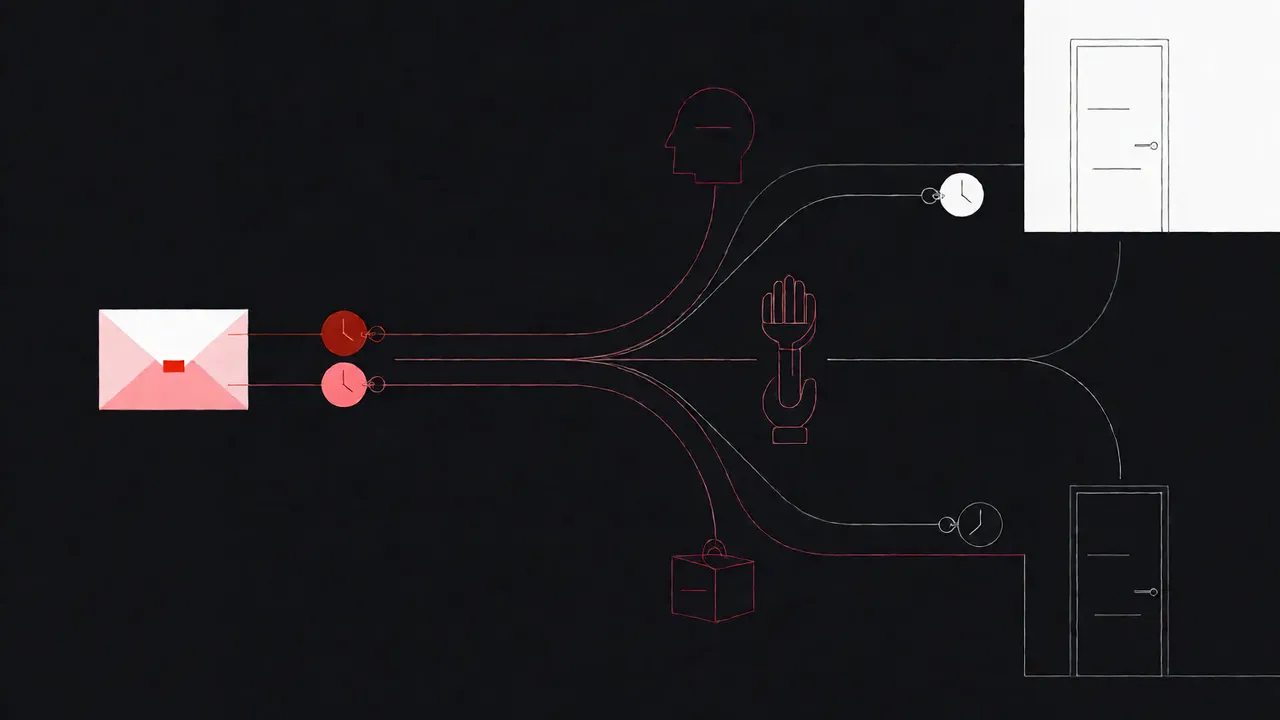
You cannot protect what you have not inventoried. Start at the agent's entry points—chat, webhook, scheduled job—and follow each piece of personal data through the model, tool arguments, vector memory, and outbound APIs. Tag every touchpoint with a data subject, a purpose, and a retention limit.
| Stage | Example data | Privacy control | Owner |
|---|---|---|---|
| Ingest | User chat with email, order ID | Consent capture, input validation | Developer |
| Inference | Prompt sent to model | Data minimization, pseudonymization | Developer |
| Tool call | Tool arguments with PII | Pre-tool-call guardrail, allow-list | Developer |
| Memory | Vector store of past chats | TTL, encryption at rest, access control | Developer |
| Outbound | API request to third party | Encryption in transit, contractual terms | Developer |
Once you have the map, mark which flows cross organizational or geographic boundaries. That determines whether you need GDPR transfer mechanisms or CCPA "sale" disclosures. This mapping step overlaps with threat modeling; if you have not done it yet, start with mapping your AI agent's attack surface before you buy or build controls.
What does AI agent data minimization look like in practice?
Data minimization means the agent only receives and stores personal data it needs for the current task. Strip direct identifiers from prompts where possible, pass pseudonymized IDs to tools, and set short TTLs on vector memory so old conversations do not persist indefinitely.
Practical rules I use:
- Replace names and emails with internal IDs in tool arguments whenever the tool does not need the raw value.
- Limit memory scope to the active session unless the user explicitly opts into long-term recall.
- Set retention policies on logs and vector stores; do not keep agent transcripts forever "just in case."
- Review each tool's schema and remove fields that return personal data the agent does not need to display.
Minimization has a floor: if you strip too much, the agent cannot do its job. Pair minimization with implementing fine-grained access control for AI agents so the agent can only reach the data stores its current task requires.
How do I encrypt AI agent personal data in transit and at rest?
Encrypt personal data in transit with TLS 1.2 or higher, and at rest with AES-256. Encryption protects data if the network or storage is compromised, but it does not stop the agent from sending plaintext to a tool it trusts.
Key management matters more than the cipher. Rotate keys, store them outside the application codebase, and enforce field-level encryption for the most sensitive fields—government IDs, health details, financial account numbers—so a database leak does not expose plaintext. Remember the limit: encryption protects data at rest and in motion, not data in use. When the agent decrypts a field to call a tool, that plaintext exists in memory and can be forwarded. That is why encryption pairs with securing AI agent tool use, not replaces it.
How do I handle user consent and data subject rights with autonomous agents?
Capture consent before the agent processes personal data, and design the agent to stop when consent is withdrawn. For data subject rights, you must be able to find, export, and delete personal data the agent has stored in memory, logs, and tool-call records.
Consent for agents is harder than for websites because the agent may act minutes or hours after the user gave permission. Store a consent receipt with each session, check it in the pre-tool-call path, and honor withdrawal signals immediately. Under CCPA/CPRA, users can opt out of the sale or sharing of personal information; if your agent sends data to third-party tools, map those flows and honor opt-out flags. The FPF emphasizes that consent and data protection for autonomous systems require ongoing attention, not a one-time banner FPF's guidance on AI agents and data protection considerations.
For deletion requests, search across chat transcripts, vector embeddings, tool-call logs, and any external records created by the agent. Document the deletion so you can prove it to a regulator.
What does a real-time data privacy guardrail for AI agents look like?
A guardrail sits in the pre-tool-call path and inspects tool arguments for personal data before execution. It returns a verdict—allow, ask, or block—plus a calibrated score, and it writes an immutable log entry. It works alongside allow-lists, least privilege, and human approval; it does not replace them.
Here is the runnable next step. Add a pre-tool-call hook that posts to the guard endpoint:
Example response:
The score represents confidence that the payload contains personal data subject to a policy; the verdict tells your orchestrator whether to proceed, escalate, or stop. Wire this into your agent framework so every tool call is evaluated before it fires. This is runtime policy enforcement in practice; see implementing real-time policy enforcement for AI agents in 2026 for the integration pattern. A guard that overpromises is worse than none, so tune your thresholds against false positives before you block production traffic.
How do I audit and prove AI agent data privacy compliance?
You prove compliance by answering three questions for any personal data point: what did the agent do with it, why was it allowed, and who approved it. Keep immutable logs of prompts, tool calls, guardrail verdicts, and consent receipts.
Your log schema should capture timestamp, agent ID, data subject ID, tool name, data categories touched, verdict, and approver if escalated. Retain logs long enough to respond to regulator inquiries, but apply your own retention limits so the audit trail does not become a liability. Run automated tests against your guardrails on every agent change so you catch policy drift before it reaches production. Validating AI agent guardrails covers the test harness, and implementing an AI agent control plane shows how to centralize these logs and decisions across multiple agents.
If you are shipping agents that touch personal data, start with the data map and add a pre-tool-call guardrail before you expand autonomy. MCP Guard exposes a single POST endpoint for real-time privacy decisions; you can run it next to your existing allow-lists and approval workflows. Learn more at mcp-guard.ai.
FAQ
How is AI agent GDPR compliance different from ordinary software compliance?
Ordinary software usually processes personal data in fixed, human-initiated flows. An agent can initiate tool calls and write to memory on its own, so you need runtime enforcement—pre-tool-call inspection and consent checks—rather than only design-time documentation.
What does AI agent CCPA compliance require for data deletion?
CCPA/CPRA gives consumers the right to delete personal information. For an agent, that means deleting it from chat logs, vector memory, tool-call records, and any downstream copies created by tools the agent invoked.
Where does encryption fit in AI agent data handling best practices?
Encryption is a baseline control, not the whole program. Use TLS 1.2+ in transit and AES-256 at rest, but pair it with access control, data minimization, and consent because encryption does not stop an authorized agent from leaking data.
Can a privacy guardrail replace access control and human approval?
No. A guardrail is a complement. It scores and verdicts individual tool calls in real time, but you still need allow-lists, least-privilege tool bindings, and human approval for high-risk actions.
How often should I audit my AI agent's data flows?
Audit whenever you add a tool, change a model, or modify a retention policy, and review the full flow at least quarterly. Automated guardrail tests should run in CI on every agent change.
Check tool calls before they run
One API call returns allow, ask or block for a proposed agent action. 1,000 free requests, then $0.20 per 1,000 checks.
Topics
- AI agent data privacy
- AI agent GDPR compliance
- AI agent CCPA compliance
- securing AI agent personal data
- AI agent data handling best practices
- AI agent data minimization
- encrypting AI agent data
- AI agent privacy risks